

The Government & Society as Enablers
I prayed for the current administration this morning. I prayed for God’s wisdom and counsel to guide as a much needed clean up in our country is being accomplished. But as with most change, there is pain. I am listening to the voices of the various concerned. Sometimes there are unintended casualties of positive change. I wish it wasn’t so. There is also a media that delights in putting a spin on things that incites outrage, terror, and opposition.
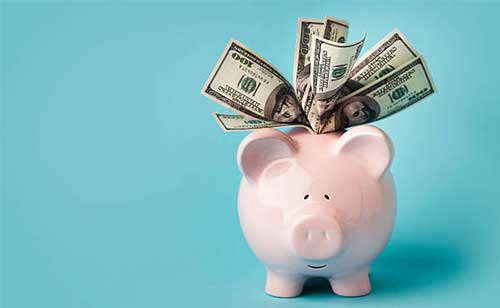
It seems to me we have conditioned our citizens to view government (the collector of a chunk of our earnings) as a Piggy Bank.
I spoke with someone recently who is going through a breakup, and what she talks about more than the sadness of losing the relationship is the financial pickle she is in because a while back she chose to make a very large non-essential purchase with a credit card. Because of that choice, there is no way for her to live independently. I think a lot of America lives that way. This person will likely either find a way to hold on to her destructive relationship, couch surf, file bankruptcy, or find a government program to get her through.
Not pointing fingers or shaming….I have been there. I understand how that can happen. One choice at a time. Other people’s choices included! Sometimes it's complicated.
As I pondered on issues this morning, I was reminded of my younger self. Now that I am older and wiser, and much more financially secure, it’s easier to be more honest with myself about the way I used to live. I think I was well into my 40’s, maybe on the second half, before I even thought about retirement. I lived at least a decade without health insurance, more or less voluntarily, because I was young and in good health, had other priorities, and could always just go to a clinic for "free" if I needed to. Granted, I wasn’t lighting the world on fire with my earnings, and I pretty much lived hand to mouth for years. There were a lot of things I didn’t have, didn’t expect to have, and went without. But I also managed to buy specialty coffees, get my nails done, take vacations, enroll my child in an expensive extra-curricular activity, and buy a lot of things that were not necessities. I spent student loan money on things I shouldn’t have. I scrimped and lived very frugally in some ways, and in other ways I made excuses for this and that. And I didn’t think significantly about how I would take care of myself, or my children, if something went sideways or what quality of life I was setting myself up for in the distant future. If I thought about it at all, I probably trusted that somewhere out there, there would be a safety net of some kind if I needed one. Or I had the fantasy that things would change “someday”, without a plan for that change. I was an expert in getting by and surviving in my immediate circumstances, but I don’t recall being motivated to seriously consider being my own safety net in the long term.
Many people, if they believe that assistance or a bail-out is possible or owed them, will make both isolated and perpetual life decisions accordingly. But is the government, via taxpayers, responsible to be the piggy bank for every able-bodied citizen who fails to be responsible for themselves or plan ahead? And if the government attempts to fulfill that role, is it not encouraging the decisions and behavior that leads to the need? That’s called “enabling.”
Years ago I read a book on investing and personal wealth-building that coined the phrase the “Latte Factor.” The Latte Factor is the amount of money a person may spend periodically or even daily on something frivolous that could be redirected toward investing for the future. The Latte Factor puts a better life and the possibility of a more comfortable end within reach of the common man. The “Latte Factor” could also be the “Cigarette Factor,” the “Nikes Factor,” the “Pedicure Factor,” the “Eating Out Factor,” the “Sporting Event Factor,” the “Apple Watch Factor,” the “Weekend Getaway Factor,” or the ”Amazon Factor.” Fill in the blank with your favorite non-essential indulgence.
My husband has twice posted an unpopular video that has the audacity to suggest you should not buy things if you don’t have the money to pay for them. Imagine that? For a good chunk of my life, I thought credit was a need and that going into debt was unavoidable. I felt entitled to certain things and if I couldn’t pay for them, it seemed reasonable to just borrow and pay over time (with interest). Especially since that is what my neighbor was doing. This is the American Way.
Perhaps we should teach kids in school and at home the Dave Ramsey notion of establishing and maintaining an “Emergency Fund” and the concepts of having a budget, living within your means, and planning for retirement. Teach your children, and model it yourself, that if you buy a house or car on credit, or otherwise find yourself in debt, how to work the “Debt Snowball” so you can get back on track and be debt-free as soon as possible. Paying cash for things as you go is liberating and also a lot cheaper. It’s anti-anxiety too!
To the best of our ability, we should at least attempt to be our own piggy bank.
The Average Joe lives right up to the edge of their paycheck and beyond. Right now we have a culture of borrowers who have often lived their productive years for the moment and failed to plan for emergencies or for the retirement years, believing deep down that Someone will be there with Something when the need arises. When you’re 20 years old, you are not anticipating a car accident that ends your career path, a divorce with an ex who successfully evades child support, draining your savings to put your drug-addicted teenager in rehab 2 or 3 times, a monstrous health crisis, or any number of catastrophes that can assail a person or family. You may also not be considering what the consequences of your irresponsible behavior might be, whether it be gross or mild. It will become someone else’s responsibility to bail you out, right? And 30, 40, and 50 year-old’s think like this too.
We have become too relaxed in America!
Going back to the effort underway to do something about the government’s runaway spending and embarrassing waste, we could be looking at savings that could restore our nation to some semblance of fiscal health and possibly free up funds to help those of our own citizens who truly need mercy and a leg-up. There will always be strugglers among us. Not everyone is cognitively or physically able to provide for themselves adequately or at all. Not everyone gets a job with great benefits. Some people face huge disadvantages right out the gate. People make mistakes in judgement and downright foolish choices. Bad things happen to people. It is an American value to help those in need and it’s a value to keep. But in all things, there are lines that should and must be drawn. Consequences are not all bad! They're great teachers and reduce undesirable choices with undesirable outcomes. Let’s not enable or promote unnecessary neediness. In many, if not most cases, assistance should be temporary, provide basics of survival, it should be goal-directed (toward stability and self-reliance where possible), and it should not be so comfortable and attractive that it becomes a sought-after way of life or safety net.
As a country we should require effort where effort can be made. Reward effort and don’t penalize. Taxpayers don’t owe able bodied/minded people what is non-essential.
Some people are quite okay with subsistence. If you’re not, then do what you can to plan and prepare for something different. Encourage others to do the same!