
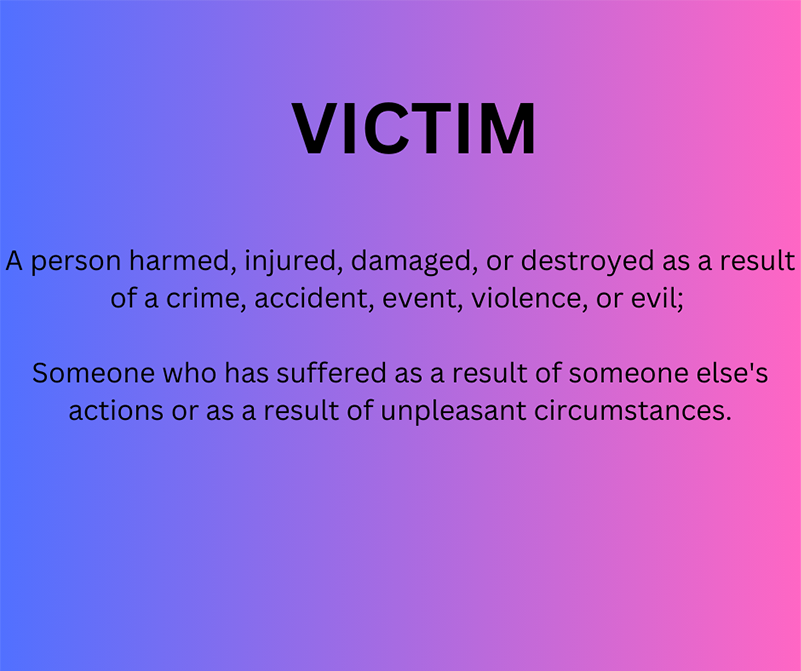

“You’re just being a victim.”
That is a popular put-down in our culture. Saying it has an air of arm-chair psychology legitimacy, doesn’t it?
As if being victimized isn’t real. Or that people who have been victimized should just shut up.
When you tell someone they are “just being a victim,” what you’re really saying is “Keep it to yourself, don’t talk about it” or possibly, “Don’t burden me with your complaining.” If the person has made a mistake in judgment, done anything foolish, or in some way participated in their own victimization, they should be silent because they “deserve what they got,” right?
How is a person who is hurt supposed to heal and perhaps find a healthier path if they are left alone in their suffering and silenced by those around them? How does this person recover from the physical, emotional, or relational injury that has befallen them if talking about it, naming it, or saying “I hurt” is somehow bad form and socially unacceptable?
I read this quote today, which was in a post about something else entirely, but nevertheless prompted my musing:
“Your insistence on nuance, your fetish for accuracy, your smug deconstruction of common sense—it doesn’t make you thoughtful. It doesn’t make you wise. It doesn’t make you progressive. It makes you an asshole. It makes you worse than a bystander. A bystander does nothing. He watches from afar. You step into the fray just to prod the victim for the imprecision of their screams.”
Let that sink in. I wanted to cry when I read that!
Is there such a thing as a “victim” mentality? Sure. People who view life through that lens see themselves as victims in most situations whether it’s true or not, and rarely, if ever, take responsibility for their own lives. They’re chronic blamers.
But when someone has truly been wronged by another, whether by chance, intentionally, or inadvertently through wrong associations and misguided decisions, that person is, in fact, a victim in that situation, and our response should be acknowledgement, caring and empathy. We might even encourage them to find their voice, process what happened to them, talk about it, and take steps to heal and grow in a loving community.
Think before you accusingly declare that someone is “just playing the victim” when real harm has been perpetrated.